Electric Boating 101 Webinar
Charged Marine Staff
March 4th, 2026, 11:30 am – 12:45 pm (CST)
Registration Link
Wisconsin is a unique state bordered by two great lakes and the largest river in North America, with 15,074 smaller landlocked lakes within. We hold 21% of the world's surface freshwater, which supports an $8.4 billion economy and 34,000 Wisconsin jobs. Despite this, Wisconsin does not have any laws regulating boating emissions.
If we want to keep Wisconsin lakes clean, it's up to us, the people, to raise awareness about cleaner alternative fuel options and promote practices that help protect our marine life. Jukka Kukkonen, Professor of EV Markets and Technology at the University of St. Thomas in Minnesota, will teach us how to better protect our waterways through electric boating.
Why should you consider electric boating?
-
They are more efficient! Traditional internal combustion engines are only 15-25% efficient due to heat and mechanical losses. By comparison, electric motors have just one moving part — the rotor — and achieve 85-95% efficiency. That makes electric boats four times as efficient as gas boats. (Additionally, newer boats are using hydrofoil technology to lift the boat out of the water, dropping energy consumption by 80% and providing a smoother ride in choppy water.)
-
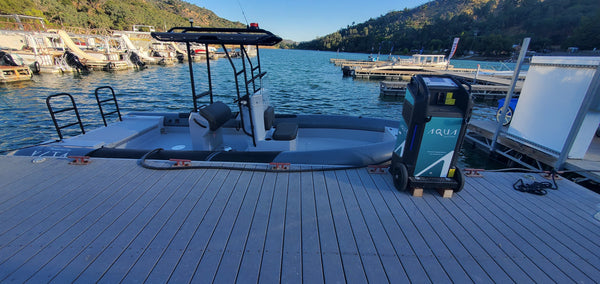
They are cheaper! To fully charge a battery for a small personal boat, from dead, every single day for a whole month... costs approximately $20 total in electricity. This is significantly cheaper than gas and can operate at roughly 700 watts for 8 hours on a charge. Small batteries can use a regular outlet that is currently available at marinas, and larger vessels can use the same chargers as electric vehicles.
-
They run much quieter, allowing for relaxed conversation and attracting fish faster!
-
They require far less maintenance compared to their traditional counterparts. There’s no need for oil changes, spark plug replacements, winterization, or battling a stubborn engine to get out on the water.
-
They create far less harm to our marine life.