RIB and Workboat OEMs Can Reduce Operating Costs and Emissions for their customers with RAD Propulsion
Charged Marine StaffThe commercial marine industry is entering a decisive transition.
Fuel volatility, tightening emissions standards, port electrification policies, and growing ESG reporting requirements are reshaping how vessels are specified and purchased. For RIB (Rigid Inflatable Boat) and workboat OEMs, this moment presents more than regulatory pressure — it presents a competitive opportunity.
By integrating electric propulsion from RAD Propulsion, OEMs can now offer customers a practical solution that reduces operating costs, lowers emissions, and enhances performance — all while future-proofing their fleets.
This is no longer theoretical. It’s commercially viable.
A Practical Fit for Real-World Duty Cycles
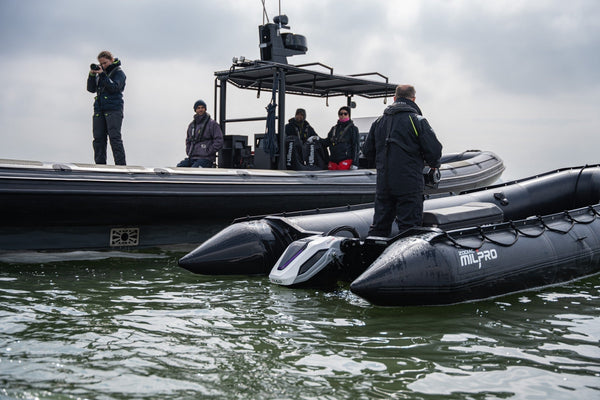
Most commercial RIBs and workboats operate in predictable, controlled environments:
-
Harbor patrol
-
Marina service operations
-
Port tenders
-
Dive and support boats
-
Short-haul crew transfer
-
Tourism and eco-tours
These vessels typically run short to medium routes, return to the same dock daily, and operate within defined duty cycles — precisely where electric propulsion performs best.
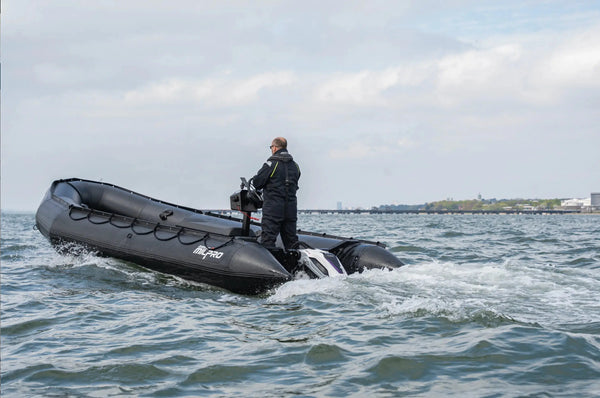
RAD Propulsion systems are engineered for commercial applications, delivering high torque at low speeds, simplified integration for OEM builders, and intelligent battery and control systems designed for reliability.
For OEMs, this means electric propulsion is no longer a niche add-on. It’s a viable standard configuration.
RAD 40: Specs That Drive Commercial Value

Understanding the technical capabilities of the RAD 40 helps illustrate why it’s such a compelling choice for OEMs and operators alike:
Continuous Power:
-
40 kW (≈ 55 hp equivalent) of continuous power — enough to propel RIBs and workboats with performance comparable to a 60-hp petrol outboard.
Electric Architecture:
-
400 V architecture compatible with fast charging, streamlining dockside operations and minimizing downtime.
Advanced Maneuverability:
-
180° drive-by-wire steering (±90°) for precise, low-speed handling — ideal for tight berths and busy harbors.
Integrated Control:
-
RADBus drive-by-wire throttle and steering system included, with digital connectivity (NMEA2000, Wi-Fi, GSM) and advanced vessel data integration.
Space-Efficient Design:
-
Compact and lightweight (≈ 98–104 kg depending on shaft length) with no intrusion into deck space when tilted up.
Cooling & Durability:
-
Closed circuit cooling with no intakes to clog, reducing maintenance and increasing reliability in both freshwater and saltwater.
Battery Flexibility:
-
Recommended battery capacity from 20 kWh up to 61 kWh or higher — configurable to mission needs and range expectations.
These capabilities make the RAD 40 a true commercial solution — not just a concept.
Lower Operating Costs: The Immediate Advantage
Fuel remains the single largest variable expense for many commercial operators. Diesel and gasoline prices fluctuate, and long-term exposure to fuel volatility creates budgeting uncertainty.
Electric propulsion fundamentally changes the operating model.
Compared to internal combustion engines, RAD-powered vessels eliminate:
-
Oil changes
-
Fuel filters
-
Injector servicing
-
Exhaust system maintenance
-
Transmission-related wear
With fewer moving parts and no combustion, maintenance intervals are extended and mechanical failures are reduced. Electricity also costs significantly less per operational hour than marine gasoline or diesel.
For high-usage vessels, the savings compound annually. Over a multi-year lifecycle, total cost of ownership becomes highly competitive — and in many cases, superior — to traditional propulsion systems.
OEMs that integrate electric are not just selling boats. They’re selling lower lifetime operational costs.
Emissions Compliance Is Becoming a Procurement Requirement
Across the United States and globally, ports and municipalities are adopting aggressive decarbonization targets. Public agencies and marine contractors are increasingly required to demonstrate reductions in direct fuel combustion emissions.
Electric propulsion eliminates tailpipe emissions entirely, helping operators:
-
Reduce Scope 1 emissions
-
Align with port electrification mandates
-
Strengthen ESG reporting
-
Qualify for clean-technology funding programs
-
Improve competitiveness in public bids
In regions with strong regulatory pressure — including California and other coastal markets — zero-emission capabilities are becoming a differentiator in procurement decisions.
OEMs that integrate RAD Propulsion position their vessels as compliance-ready platforms.
Infrastructure Is No Longer a Barrier
Unlike recreational boating, commercial fleets operate from centralized docks. That predictability simplifies charging.
Most RIB and workboat operators:
-
Return to the same berth daily
-
Have access to shore power
-
Operate within defined geographic zones
With proper load assessment and dockside charging integration, electric vessels can be seamlessly incorporated into daily operations. Charging becomes routine — no different from plugging in fleet vehicles overnight.
For OEMs, this reduces adoption friction and allows electric to be delivered as part of a complete operational solution.
A Better Vessel Experience
Beyond cost and compliance, electric propulsion improves the day-to-day experience for operators and crew.
RAD powered vessels provide:
-
Quiet operation for tourism and patrol
-
No exhaust fumes
-
Reduced vibration and operator fatigue
-
Immediate throttle response
-
A modern, forward-looking brand image
For tourism operators, quiet vessels enhance passenger experience.
For harbor patrol and law enforcement, reduced noise can improve tactical effectiveness.
For marinas and ports, zero-emission vessels reinforce sustainability commitments.
Competitive Differentiation for OEMs
The RIB and workboat market is competitive and often commoditized around hull design, horsepower, and pricing.
Electric integration allows OEMs to compete differently.
By incorporating RAD Propulsion systems, OEMs can:
-
Access new municipal and port budgets
-
Position as innovation leaders
-
Offer lifecycle cost advantages
-
Bundle propulsion and energy planning
-
Build long-term service relationships
Instead of selling another internal combustion configuration, OEMs can deliver a vessel designed for the next decade of marine operations.
The Business Case Is Clear
When evaluating lifecycle economics, electric propulsion now delivers measurable advantages:
-
Lower fuel costs
-
Reduced maintenance
-
Incentive eligibility
-
Regulatory alignment
-
Stronger ESG positioning
-
Operational reliability
For many commercial duty cycles, the question has shifted from “Why electric?” to “Why not electric?”
Ready to See It in Action?
RIB and workboat OEMs interested in integrating RAD Propulsion — or operators evaluating electric conversions — can now access U.S. demonstrations and technical consultations.
Charged Marine works directly with OEMs, operators, ports, and propulsion partners to accelerate electric deployment in real-world marine environments.
For demos, integration discussions, and commercial inquiries, contact Charged Marine.
(800) 476-3171 / info@chargedmarine.com