Electric Boat Market Growth Trends: Key Drivers Shaping the Future
Charged Marine StaffElectric Boat Market Growth Trends reveal a promising trajectory as global demand for sustainable and zero-emission marine transportation intensifies through 2035. With increasing environmental regulations, advancements in battery technologies, and growing eco-conscious consumer preferences, the market is set for transformative expansion. Industry stakeholders—from manufacturers to tourism operators—stand to benefit from innovations enabling quieter, cleaner, and more efficient vessels. This article delves into forecasts and the core drivers steering this dynamic industry, offering insights into what stakeholders can expect as electric boats redefine marine mobility and leisure over the next decade.
Comprehensive Overview of Electric Boat Market Growth Trends
Market Size and Forecast Through 2035
The Electric Boat Market Growth Trends forecast a substantial rise in market valuation, with projections estimating expansion from approximately USD 7.7 billion in 2025 to over USD 20 billion by 2035. This represents an expected compound annual growth rate (CAGR) above 10%, driven largely by rising adoption across commercial, recreational, and tourism sectors. The increasing focus on emission reductions and rising operational cost benefits underpin this forecast.
Key Growth Segments and Regional Focus
Market segmentation highlights the dominance of pure electric boats, capturing the largest share due to their complete zero-emission operation and low maintenance advantage. Regionally, the Asia-Pacific region leads growth, propelled by rapid industrialization and government incentives, followed closely by Europe and North America where stringent environmental regulations are accelerating adoption.
Technological Innovations Accelerating the Electric Boat Market
Advancements in Battery Technologies
Lithium-ion battery systems are driving performance leaps in the electric boat market by significantly improving energy density, charging speeds, and overall lifecycle costs. Emerging solid-state battery innovations promise even more dramatic improvements, potentially doubling range and enhancing safety. This continuous enhancement in battery tech is key to relieving range anxiety and expanding electric boat applications.
Integration of Smart Propulsion and Autonomous Systems
Modern electric boats increasingly incorporate intelligent battery management systems and autonomous navigation technologies. These advancements enable optimized energy usage, predictive maintenance, and improved operational safety, further increasing market attractiveness for commercial operators and consumers mindful of cost-efficiency and reliability.
Environmental Regulations Driving Market Expansion
Global Emission Reduction Mandates
Governments worldwide are establishing strict marine emission controls, including zero-emission zones in major harbors and inland waterways. Compliance with regulations such as the IMO 2030/2050 carbon targets and regional clean port initiatives creates a powerful impetus for electric boat adoption.
Local and Regional Regulatory Initiatives
Examples include the European Union’s Green Deal promoting emission-free waterways, California’s Commercial Harbor Craft regulations requiring zero emissions by 2035, and China’s inland waterway electrification mandates. These frameworks not only bolster demand but also encourage infrastructure investments and innovation.
Market Drivers: Why the Electric Boat Market Is Growing
Environmental Sustainability and Tourism
Eco-tourism is a significant market driver, with resorts, charter companies, and national parks adopting electric boats to reduce noise, emissions, and water pollution. This trend enhances the visitor experience while preserving sensitive ecosystems, driving broader acceptance among recreational and commercial operators.
Economic Benefits and Operational Efficiency
Electric boats offer substantially lower fuel and maintenance costs compared to combustion-powered vessels. Reduced engine wear, fewer moving parts, and lower noise contribute to longer service intervals and improved crew working conditions, appealing to ferry operators, water taxis, and tour companies seeking to reduce operational expenditures.
Challenges and Market Restraints
Charging Infrastructure Limitations
One of the primary barriers is the uneven development of high-capacity charging infrastructure in marinas and ports. Many facilities require significant electrical upgrades to support fast charging systems necessary for commercial electric boats, delaying widespread adoption especially outside major urban centers.
Range and Energy Storage Concerns
Range anxiety persists among users relying on battery power for marine applications. Weather variability increases energy consumption unpredictably, and long-range operations remain challenging without rapid charging or battery-swapping solutions. This limits electric boat use primarily to short routes or inland waterways at present.
Segment Analysis of the Electric Boat Market
By Propulsion: Pure Electric vs. Hybrid Electric Boats
Pure electric boats continue to dominate market share, favored for their zero-emission operation and simple powertrain architecture. Hybrid electric boats provide a transitional solution, combining battery power with combustion engines to address range limitations, making them attractive for longer routes requiring operational flexibility.
By Battery Type: Lithium-Ion vs. Lead-Acid
Lithium-ion batteries are gaining rapid ground due to superior energy density and decreasing costs. However, lead-acid batteries still maintain substantial market share, especially in cost-sensitive segments or smaller recreational vessels, thanks to lower upfront costs and widely established supply chains.
Regional Insights into Electric Boat Market Growth
Asia Pacific: Fastest-Growing Market
The Asia Pacific electric boat market is expanding swiftly thanks to government mandates enforcing green propulsion, large-scale inland waterway transport, and booming eco-tourism sectors. China is the largest market player, leveraging its domestic battery manufacturing base and vast coastal communities to accelerate growth.
Europe and North America: Mature and Regulation-Driven Markets
Europe’s growth is propelled by progressive marine emission policies, with Germany, Norway, and the Netherlands leading electrification efforts. North America, led by the U.S. and Canada, capitalizes on recreational boating culture and state-level clean marina programs to encourage electric boat adoption despite infrastructure gaps in some regions.
The Role of Commercial Applications in Market Expansion
Electrification of Passenger Ferries and Water Taxis
Urban waterways and coastal cities are turning to electric powered ferries to reduce noise and pollution. Water taxis, frequently operating in protected or noise-sensitive areas, benefit from electric propulsion’s quiet operation and low emissions, increasing demand for such vessels.
Specialized Use in Workboats and Service Vessels
Port service boats, research vessels, and inspection craft are adopting electric solutions for operational cost savings and compliance with clean port policies. This niche segment is growing steadily, demonstrating the versatility of electric propulsion beyond recreational uses.
Competitive Landscape: Leading Players and Innovations
Key Market Players Driving Growth
Leading manufacturers include FRAUSCHER BOOTSWERFT, Duffy Electric Boat Company, Vision Marine Technologies, RAND Boats, and Quadrofoil. These companies invest heavily in R&D to improve propulsion efficiency, battery integration, and vessel design, fostering competitive advantages in fast-growing markets.
Emerging Technologies and Collaborations
Partnerships between electric propulsion specialists and boat builders are accelerating product innovation. Innovations such as solar-assisted charging, hydrofoil electric boats enhancing efficiency, and integration with autonomous navigation systems are shaping next-generation electric vessels.
Infrastructure Development and Its Impact on Market Growth
Charging Network Expansion
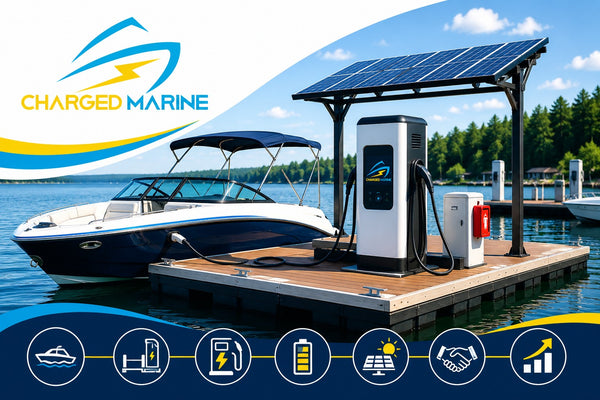
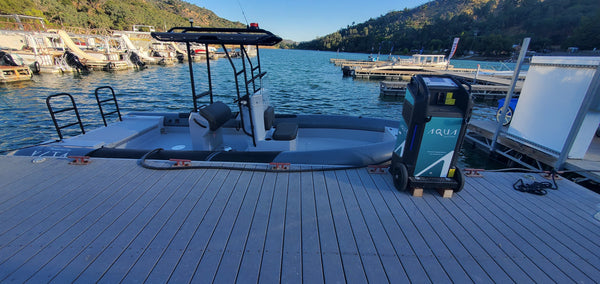
Significant investments in charging stations, including solar-powered marinas and high-capacity rapid chargers, are critical to supporting electric boat market growth. Initiatives in major boating hubs facilitate daily operations for commercial vessels and encourage private owners to consider electric propulsion.
Standardization and Interoperability of Charging Systems
Developing universal charging standards and compatible connectors simplifies marina upgrades and increases user convenience. This standardization is expected to reduce barriers to entry and foster wider adoption across diverse geographies.
Future Outlook: Innovations and Growth Opportunities Through 2035
Expansion into Long-Range and Offshore Applications
Advances in battery capacity and hybrid-electric configurations are progressively enabling longer marine routes and offshore cruising capabilities. This unlocks markets previously inaccessible to electric boats, such as ferries on extended routes and luxury yachts, broadening the addressable market.
Integration with Renewable Energy and Autonomous Systems
Coupling electric boats with renewable shore-side energy sources like wind and solar reduces operational carbon footprints further. Autonomous navigation technologies optimize energy use and vessel scheduling, offering operational efficiencies that will become industry standards by 2035.
Electric Boat Market Growth Trends: Summarizing the Outlook
The Electric Boat Market Growth Trends emphasize robust expansion fueled by regulatory pressures, technological breakthroughs, and shifting consumer preferences toward sustainability. Pure electric boats lead market share, supported by rapid lithium-ion battery improvements and growing charging infrastructure worldwide. Regions like Asia Pacific and Europe spearhead adoption, while commercial use cases in passenger ferries and eco-tourism catalyze diversified growth. Challenges such as infrastructure gaps and range limitations persist but will diminish as innovation and public investment continue. Stakeholders aiming to capitalize on this momentum should monitor regulatory developments, invest in technology advancement, and explore strategic partnerships. To learn more about the evolving electric boat ecosystem and harness opportunities from the promising Electric Boat Market Growth Trends, visit leading manufacturers and industry expert platforms for updates and product insights.