Maine Installs Its First Public Electric Boat Charger in Portland: What It Means for the Future of Marine Electrification
Charged Marine StaffPortland, Maine Launches the State’s First Public Electric Boat Fast Charger
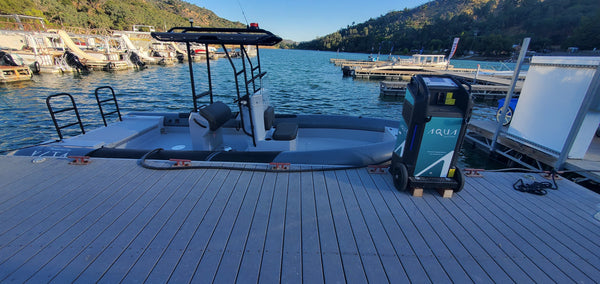
Portland, Maine has officially unveiled the state’s first public electric boat charger, a major milestone for clean-marine innovation and the rapidly growing electric boat industry. The new DC fast-charging station at Wright’s Wharf is the first high-power charger on Maine’s working waterfront and is designed to support the next generation of commercial electric vessels.
The project represents nearly $1 million in combined federal and local investment and positions Portland as an emerging leader in the transition to zero-emission marine transportation.
Why This Electric Boat Charger Is a Big Deal
For boat owners, marinas, and commercial operators, a major barrier to adopting electric vessels has been the lack of shore-side charging infrastructure. While EV charging on land is expanding rapidly, marine charging has lagged—until now.
Portland’s new charger directly addresses this gap by offering:
-
Up to 75 kW of marine-grade DC fast charging
-
High-voltage capability for modern electric workboats
-
Corrosion-resistant, weather-hardened components
-
Public access for any electric vessel
Upgraded dockside shore-power and electrical panels
This is the same level of advanced charging technology used in leading electric boat hubs in Europe and California.
Electric Workboat “Heron” Demonstrates Commercial Use Case
The first vessel to use Maine’s new charger is Heron, a 28-foot all-electric aquaculture workboat operated by Maine Ocean Farms. Heron proved real-world viability during the launch:
-
Left Freeport
-
Delivered aquaculture product in Portland
-
Fast-charged at Wright’s Wharf
-
Returned to its homeport entirely on electric power
This closed-loop route demonstrates exactly how electric propulsion can support commercial marine operations.
“This charger makes a full electric round trip possible for us,”
said Willy Leathers, Co-Owner of Maine Ocean Farms.
“It cuts emissions and reduces noise on the water while supporting sustainable aquaculture.”
With marine EV ranges improving, the ability to charge quickly at working ports becomes essential.
Technical Specs of the New Marine Fast Charger
Portland’s electric boat charging station from Aqua superPower uses a Level 3 DC fast charger specifically engineered for marine environments. Key technical features include:
75 kW Charging Power
Allows most electric workboats to fully recharge within 1–2 hours, depending on battery size.
Marine-Grade Protection
Salt-fog resistance, reinforced cable housings, and dockside safety systems.
High-Voltage Compatibility
Supports current and next-generation electric vessels from major marine OEMs.
Utility-Integrated Shore Power
Installed with grid upgrades to ensure reliable power delivery during peak charging loads.
Publicly Accessible Location
Boaters and commercial operators can use the station without special membership or fleet agreements.
This technical setup is considered a replicable model for marinas and coastal towns looking to adopt electric boat charging in the near future.
How This Charging Station Advances Marine Electrification
1. Reduces Emissions and Noise on Working Harbors
Electric vessels eliminate tailpipe emissions and dramatically reduce noise—an important benefit for fisheries, aquaculture, eco-tourism, and harbor communities.
2. Lowers Operating Costs for Commercial Fleets
Electric propulsion offers major savings in:
-
Fuel costs
-
Engine maintenance
-
Downtime
-
Vibration and noise fatigue
Charging inland or waterfront commercial fleets becomes more attractive when a reliable fast charger is available.
3. Unlocks Electric Vessel Adoption in Maine and Beyond
Boat dealers, aquaculture companies, ferry operators, and marinas now have a real precedent for EV-ready waterfronts.
4. Creates a Template for Other Coastal States
The project’s funding structure—DOE grant plus local match—can be replicated by harbors nationwide pursuing clean-marine transitions.
What This Means for the Future of Electric Boating
Portland’s electric boat charger signals the beginning of a national transition toward zero-emission marine infrastructure. Combined with rapid improvements in battery capacity, lightweight hull design, and high-efficiency propulsion, the need for reliable, high-power charging is increasing quickly.
This project opens the door to:
-
Electric passenger ferries
-
Harbor water taxis
-
Electric workboats for marinas and aquaculture
-
Mobile charging barges
-
Solar-powered docks and microgrids
-
Electric tourism and recreational fleets
Communities that act now—like Portland—will be first in line for federal funding, tourism opportunities, and clean-marine economic growth.
Charged Marine’s Perspective
At ChargedMarine.com, we see this development as one of the most significant steps toward widespread marine electrification on the East Coast. The combination of:
-
Public access
-
High-power charging
-
Commercial-scale operations
-
Federal-supported funding
…makes this project a blueprint for modern marine charging infrastructure.
As more ports, marinas, and waterfront industries electrify, the demand for robust charging solutions will accelerate. Portland’s installation shows exactly what the future of clean marine transportation looks like.
Electric Boat Charging Solutions
If your marina, port district, or waterfront business is exploring electric boat charging, Charged Marine can help develop:
-
Planning and Site layouts
-
Charging Infrastructure plans
-
Marine microgrid designs
-
Electric Charger Vendor evaluations
-
Grant-ready applications
-
Solar + battery integrations
-
Floating DCFC charge barge solutions
- Utility Integration
Charged Marine is here to guide you through recreational and commercial electric boat charging!