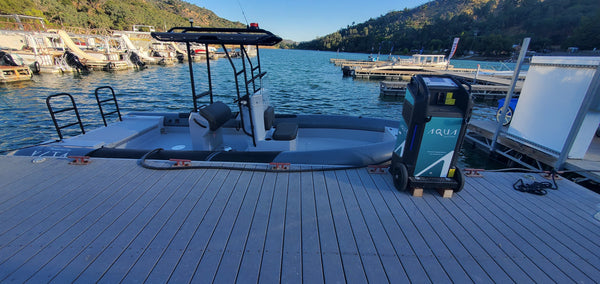
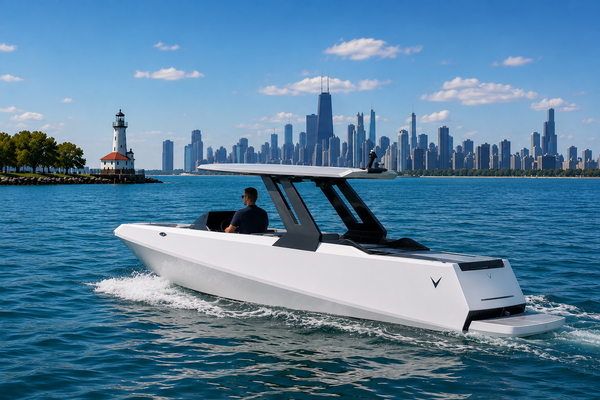
Floating Dock Chargers For Electric Boats
Charged Marine StaffDesigning the Next Generation of Floating Dock Chargers
How Charged Marine Can Help Marinas, Dock Manufacturers and Waterfront Developers Build Electric Boat Charging Into the Dock
Electric boats are changing what boaters expect from marinas—and charging infrastructure is quickly becoming part of the modern waterfront.
For many locations, however, the best place for the charger may not be on shore. It may be on the dock itself.
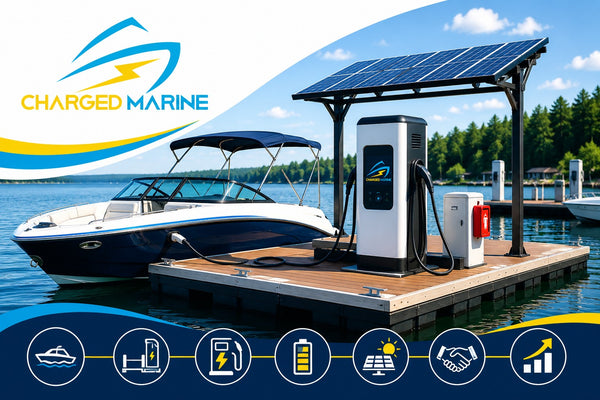
Floating dock charging creates an opportunity to bring power directly to the vessel while designing the charging system as an integrated part of the marina rather than an accessory added after the fact.
For marina owners, dock manufacturers, waterfront developers, municipalities and electric boat companies, that growth creates a significant opportunity.
Charged Marine can help turn that opportunity into a practical floating charging solution.
Why Floating Dock Charging?
Traditional marine electrical infrastructure was designed primarily around shore power—not propulsion.
Electric boats introduce very different requirements.
Depending on the vessel and its use case, charging infrastructure may need to support everything from overnight AC charging to high-power DC fast charging.
Floating charging infrastructure brings the charger closer to the vessel and can potentially reduce long cable runs and extensive shoreline construction while providing greater flexibility as marina layouts and charging demand evolve.
Growth factors driving adoption, including:
-
Growth in electric recreational boating
-
Marina modernization
-
Public investment in waterfront electrification
-
Flexible installation options
-
Modular dock configurations
-
Faster vessel charging
-
Improved berth utilization
-
Renewable energy integration
-
Battery-buffered charging
-
Intelligent energy management
The opportunity isn't simply to put a charger on a dock.
It's to design the dock, charger, electrical system and vessel interface as one integrated system.
Charged Marine: From Concept to Deployment
Charged Marine works with marina operators, dock manufacturers, developers, utilities, charging companies and electric boat manufacturers to develop marine charging solutions around the actual needs of the waterfront.
A floating dock charging project can involve multiple disciplines that traditionally operate independently.
We help bring them together.
1. Determine the Right Charging Strategy
The first question isn't which charger to purchase.
It's:
What are you trying to charge?
A marina serving recreational boats that remain in their slips overnight may have very different requirements from a transient dock serving electric boats throughout the day.
Likewise, an electric ferry, workboat, water taxi or charter operation may require substantially more energy and faster turnaround.
Charged Marine can help evaluate:
-
Vessel types
-
Battery capacities
-
Charging capabilities
-
AC versus DC charging
-
Expected dwell times
-
Daily energy requirements
-
Number of charging sessions
-
Peak charging periods
-
Future electric boat adoption
-
Expansion requirements
From there, we can help determine the appropriate combination of AC charging, DC fast charging or both.
2. Design Charging Into the Floating Dock
One of the biggest opportunities is designing charging infrastructure into the dock from the beginning.
Instead of treating the charger as equipment that is simply bolted onto a dock, Charged Marine can work with dock manufacturers and engineering partners to consider the complete charging environment.
That can include:
-
Charger placement
-
Structural integration
-
Electrical pathways
-
Conduit routing
-
Cable management
-
Equipment protection
-
Vessel access
-
ADA and pedestrian considerations
-
Bollard and pedestal locations
-
Lighting
-
Signage
-
Communications equipment
-
Emergency shutoffs
-
Future charger expansion
For existing marinas, the same approach can be applied when evaluating how charging could be incorporated into current floating docks.
The objective is simple:
Make charging part of the dock—not an afterthought.
3. Engineer for the Marine Environment
A charger installed over or adjacent to water operates in one of the most demanding environments for electrical equipment.
Saltwater, humidity, spray, temperature changes, vibration, UV exposure and constant dock movement all need to be considered.
Charged Marine can help develop specifications addressing:
-
Corrosion-resistant materials
-
Marine-rated electrical components
-
Weatherproof and IP-rated enclosures
-
Connector protection
-
Cable storage and management
-
Equipment mounting
-
Electrical isolation
-
Grounding and bonding
-
Emergency disconnects
-
Service access
-
Maintenance requirements
Proper design can help improve reliability, extend equipment life and create a better charging experience for boaters and marina personnel.
4. Solve the Power Problem
Installing the charger may be the easy part.
Getting enough electricity to it can be considerably more complicated.
Many marinas were built decades before anyone envisioned multiple electric boats drawing significant amounts of power simultaneously.
Charged Marine can help evaluate the complete energy system, including:
-
Existing marina electrical capacity
-
Utility service
-
Transformers
-
Switchgear
-
Distribution
-
Available dock power
-
Peak demand
-
Demand charges
-
Load management
-
Future charging requirements
Instead of automatically assuming that a marina needs a massive utility upgrade, we can also evaluate alternatives.
5. Incorporate Smart Load Management
Not every boat needs maximum charging power simultaneously.
Intelligent energy management can distribute available electrical capacity across multiple charging stations based on vessel requirements, departure schedules, power availability and other priorities.
This can allow a marina to support more charging ports without necessarily providing maximum power to every charger at the same time.
For a floating charging system, Charged Marine can help develop a strategy incorporating:
Charger + Energy Management + Marina Electrical Infrastructure + Vessel Demand
That becomes increasingly important as a marina moves from one or two chargers to an entire electric-ready dock.
6. Explore Battery-Buffered Charging
A marina may want DC fast charging even when the available utility service cannot easily support the charger's peak output.
Battery energy storage can potentially help bridge that gap.
A battery-buffered system can store electricity over time and provide additional power during high-demand charging sessions.
Depending on the site, this approach may help:
-
Reduce peak utility demand
-
Support higher charging power
-
Delay certain infrastructure upgrades
-
Improve resiliency
-
Integrate renewable energy
-
Manage charging during peak periods
7. Integrate Solar and Distributed Energy
Some floating charging systems may go even further by incorporating solar generation and energy storage.
This can be particularly interesting for remote docks, lakes, resorts, parks and waterfront locations where bringing additional utility power to the dock is expensive or impractical.
Potential configurations could include:
Solar + Battery Storage + Charger
or
Grid + Solar + Battery + Charger
Charged Marine has also explored how distributed and off-grid energy systems can support electric boat charging at marinas, including solar-powered floating docks and marina microgrids.
The goal isn't necessarily to take every charger off-grid.
It's to determine the most practical combination of grid power, renewable generation, storage and intelligent charging for each location.
8. Design for Expansion
One of the most important recommendations from the Fact.MR analysis is the development of modular charging systems that can accommodate future dock expansion.
That's critical.
A marina may only need two electric boat chargers today.
In five years, it could need twenty.
A well-designed floating charging platform should anticipate that possibility.
Charged Marine can help develop a phased infrastructure roadmap:
Phase 1 — Initial charging deployment
Install the first charging locations and establish the electrical backbone.
Phase 2 — Electric-ready slips
Prepare additional docks, conduit and electrical distribution for future chargers.
Phase 3 — Charging network
Expand charging throughout the marina as electric boat adoption increases.
This approach allows marina owners to invest based on actual demand while avoiding the cost and disruption of repeatedly rebuilding infrastructure.
More Than a Charger: A New Waterfront Amenity
Charging can also become a new customer amenity and potentially a new revenue stream.
Electric boat owners will increasingly consider charging availability when deciding where to dock, visit, dine, stay or keep their boats.
Floating charging infrastructure can help marinas:
-
Attract electric boat owners
-
Differentiate their property
-
Increase transient visits
-
Improve customer amenities
-
Support electric boat rentals and charters
-
Prepare slips for future vessel technology
-
Generate charging revenue
-
Support sustainability initiatives
-
Strengthen grant applications
-
Create partnerships with boat manufacturers
-
Future-proof waterfront infrastructure
In that sense, a floating charger isn't simply electrical infrastructure.
It can become part of the marina's business strategy.
Who Can Charged Marine Work With?
Floating charging isn't limited to traditional recreational marinas.
Charged Marine can help develop concepts and projects for:
-
Marinas
-
Dock manufacturers
-
Yacht clubs
-
Resorts
-
Municipal waterfronts
-
Parks
-
Boat clubs
-
Electric boat manufacturers
-
Rental and charter operators
-
Commercial fleets
-
Workboat operators
-
Water taxis
-
Ferry operators
-
Waterfront developers
We can also help assemble the ecosystem required to move a project forward—including dock manufacturers, charging companies, utilities, electrical contractors, engineering firms, energy storage providers, solar developers, electric boat manufacturers and funding partners.
Build the Dock Around the Future of Boating
The transition to electric boating won't happen with chargers alone.
It will require rethinking how waterfront infrastructure is designed.
The next generation of docks can be more than places to tie up a boat. They can become intelligent energy platforms capable of delivering electricity, managing loads, integrating renewable energy, supporting multiple vessel types and expanding as demand grows.
The floating dock charger market's projected growth from $95 million in 2026 to nearly $694 million by 2036 suggests that this transformation is already beginning.
Charged Marine helps marina owners, dock manufacturers and waterfront developers move from:
Idea → Feasibility → Design → Energy Strategy → Charging Infrastructure → Deployment
Whether you're designing a new floating dock, modernizing an existing marina or exploring a completely self-contained floating charging platform, Charged Marine can help develop a solution built around your waterfront, your electrical infrastructure and the boats you need to charge.
Ready to Design a Floating Dock Charger?
Charged Marine can help you develop the concept, identify the right technology partners, evaluate energy requirements and create a roadmap from initial design through deployment.